Amira Learning shows up in a kindergartener’s supply list as a reading buddy, and in a state legislature as a line item. The company reports use in more than 250 school districts across 49 states, and in Georgia, North Dakota, and Oklahoma, it’s the free, state-approved dyslexia screener every K-3 student now takes.
For a teacher carving small-group time around mandatory Amira minutes, or a parent whose kid came home upset because “she kept looking at him,” a vendor case study and a Trustpilot star rating aren’t enough to decide whether Amira Learning is worth it.
The short version: Amira the technology is legitimate. It’s built on a licensed, decades-old assessment, and it has real research behind it, including a Boston University evaluation award. The problem isn’t usually the tool itself. It’s how it gets deployed — mandated top-down with no teacher input, no opt-out communicated to parents, and a well-documented blind spot for accents, lisps, ELL speech, and soft voices that districts haven’t fixed.
What follows separates what Amira’s own research claims from what teachers and parents are actually reporting in the classroom, then covers what can actually be done about it.
What Amira Learning Actually Is
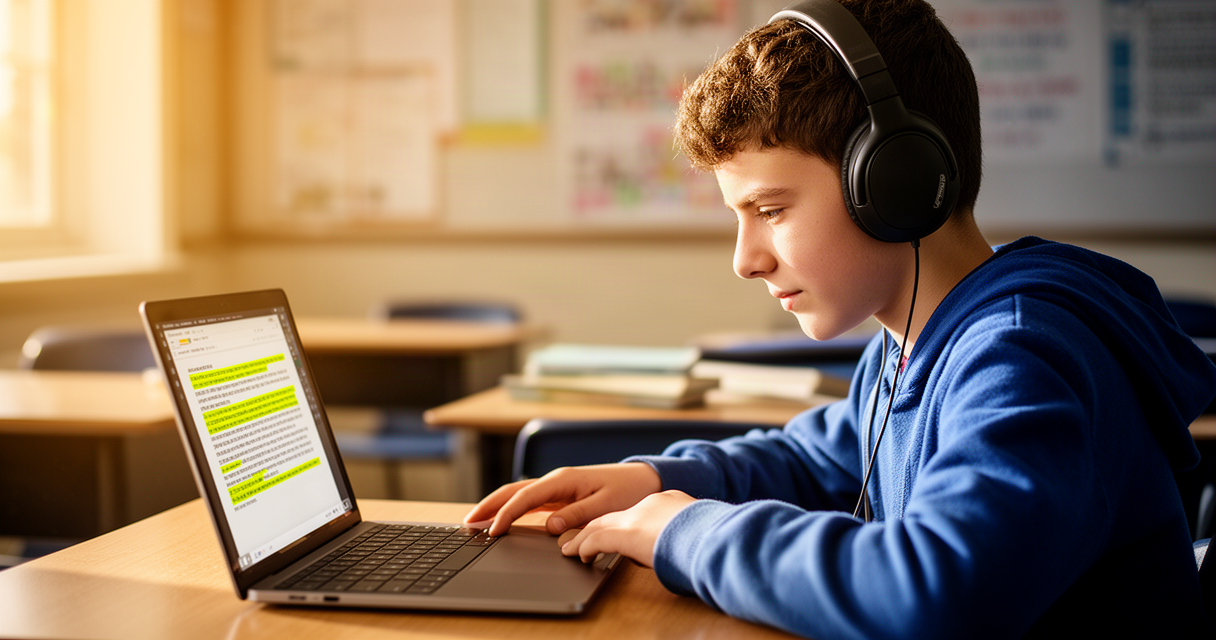
Amira is an AI-powered reading coach for PreK-3 students. A child reads aloud into a microphone, the system listens in real time, flags miscues, and produces a fluency and comprehension score.
The assessment core isn’t a from-scratch AI model. It’s a licensed digital version of the Texas Primary Reading Inventory (TPRI), a reading assessment developed through University of Texas Health Science Center research and used in classrooms since the 1990s. Amira automates the part that used to require a teacher sitting one-on-one with a child and a stopwatch.
The product also includes a dyslexia-risk screener component, which is the piece driving most of the state mandates covered below. Amira is distributed through a partnership with Houghton Mifflin Harcourt (HMH), which explains its rapid spread into districts that already use HMH curriculum materials.
Amira doesn’t publish public pricing, but a 2026 breakdown from SpellingJoy lists four tiers: Assess at about $7.50 per student per year, Instruct at about $12.50, Tutor at about $15, and the Full Suite at about $35. Many districts never see these numbers directly, because state contracts cover the cost entirely — a detail that matters later in this article.
Amira’s own figure — 250-plus districts across 49 states — is a vendor-reported number, not an independently audited one. It’s worth repeating with that caveat, because it’s the stat every other article on this topic repeats without it.
The Research Amira Points To (And What It Actually Shows)
Amira’s marketing leans hard on two data points, and both deserve a fair hearing before any criticism.
First, Amira reports an effect size of approximately 0.40 on reading growth, per its own research page. The company frames this as comparable to or exceeding high-dosage human tutoring. That’s a real number Amira cites — not an independently replicated finding, and the distinction matters. Effect sizes reported by a vendor about its own product are a starting claim, not a settled result.
Second, Boston University’s EVAL Collaborative named Amira the winner of its inaugural EdTech Evaluation Challenge in March 2026. This is a real, independently reported award, not a vendor press release dressed up as one. But the award is for being selected as the subject of BU’s evaluation — the actual randomized controlled trial the EVAL team is running on Amira is still in progress as of 2026, not completed. Winning the chance to be rigorously tested is meaningfully different from having already passed the test, and Amira’s marketing doesn’t always make that distinction clear.
A Teachers College, Columbia University study is also cited, showing fluency, vocabulary, and comprehension gains in as little as eight weeks with roughly 13 minutes of weekly practice.
None of this makes Amira snake oil. TPRI has decades of legitimate research behind it as a benchmarking instrument, and Amira didn’t invent the underlying assessment science — it automated the delivery. But “Amira reports” and “BU is now testing” are not the same claim as “independently proven,” and a reader deciding whether to push back on a district mandate should know which one they’re actually being sold.
One kindergarten teacher on r/kindergarten, using Amira as a state-mandated screener, offered a useful counterweight to pure skepticism: “That 10 minute assessment gives me and parents a wealth of information… Of all the things we have to do on iPad it’s the only mandated thing and the least drill based.” The benchmark data has real value for teachers who use it as one input, not a verdict.
What Teachers and Parents Are Actually Reporting
This is the part the vendor page and the competing “is it worth it” articles skip entirely, and it’s the reason most people search this topic in the first place.
Across separate, unconnected threads on r/kindergarten and r/Teachers, the same specific complaint shows up again and again: Amira’s speech recognition struggles with accents, lisps, articulation disorders, and soft or high-pitched voices. A parent on r/kindergarten put it plainly: “My daughter has a lisp and the program did not account for that and was very frustrating for her.”
A teacher on r/Teachers described a full year of technical failure modes after a school trial that ultimately wasn’t renewed: “Robot does not hear regional accents or lisps. Robot will stop listening while the kid is still speaking and then mark them wrong when it restarts. Robot was pushing my lowest students up way too quickly: a student would be reading 20 wpm and then they would introduce new sounds… Since it was supposed to replace teacher fluency instruction…it shouldn’t be doing that.”
Another teacher connected the pattern directly to a specific student population: “My students with speech disorders struggle the most. The data really does not reflect the ability my students have. Especially with the majority of my students being ELL.”
A parent of a dyslexic second-grader described the same issue landing on the exact use case Amira is mandated for: “My son uses it in 2nd grade. He’s dyslexic and I’m seeing lots of problems with Amira, his teacher is currently keeping him off of it until we can see if there is any solution but I’m afraid the issues are baked into the program.”
This pattern should be framed carefully. Automatic speech recognition struggling with children’s speech, accents, and non-standard articulation is a known, general category problem in ASR technology — it isn’t unique to Amira, and it isn’t a proven, quantified defect rate. No public data exists breaking down Amira’s error rate by accent, speech disorder, or age group, and neither Amira nor anyone else has published one. What exists is a recurring pattern of specific, first-hand accounts from strangers in different districts across different years, which is meaningfully stronger evidence than a single bad review — but it’s still not the same as an audited error rate.
The sentiment isn’t unanimous. One teacher who used Amira in a previous district described it as underwhelming rather than damaging: “It was kind of creepy and we had so many online programs we really only used it for the kids who were severely below grade level… I wouldn’t say it was harmful though.” That distinction — disliked versus harmful — is worth holding onto through the rest of this article.
The public review record backs the field complaints up in aggregate, if imperfectly. Amira is reported on Trustpilot at around 1.8 out of 5 as of the 2026 research date, based on a small sample of roughly 14 reviews. Review platforms self-select for extreme experiences — happy users rarely leave reviews — so this number should be read as a signal that negative sentiment is public and persistent, not as a scientific measure of overall satisfaction.
Is Amira Being Used to Replace Small-Group Instruction?
This is the question actually driving a lot of the anger, and it’s worth separating from the technical accent issue.
Multiple teachers on r/kindergarten, independently, describe the exact same scheduling pattern: Amira minutes land during the block that used to be small-group, aide-supported reading time. A parent in that thread stated it directly: “The districts bought Amira to handle small groups instead of hiring teachers. You should be mad. The time students are required to be on Amira is the same time teachers are required to be working with small groups.”
A kindergarten teacher in the same thread corroborated the pattern from the classroom side, and described the workaround: “I’m a kindergarten teacher required to use amira and I hate it! As others have said, it is done as a cost saving measure to use instead of actually hiring educational assistants to help teach small reading group. What I have done is recruit a bunch of parent/grandparent volunteers to come during this time that I train to help me teach small group.”
This should be stated for what it is: teachers’ characterization of district scheduling and motivation, not a confirmed district budget document that says “Amira instead of an aide.” No district has been shown publicly announcing that trade. But when a teacher is required to hit Amira usage minutes during the same window where small-group instruction used to happen, and has to recruit volunteers to preserve that instruction anyway, the practical effect on classroom time is identical to a budget cut — whatever the district’s internal accounting says.
That’s the real issue, and it’s bigger than Amira specifically. An AI tutor filling a human instructional slot isn’t automatically bad. An AI tutor filling that slot without adding staff, without teacher discretion, and without acknowledging that’s what happened, is a decision worth scrutinizing regardless of how the vendor markets it.
Where Amira Is Mandated or State-Funded in 2026
Whether a family or teacher has any leverage here depends heavily on state law. As of 2026, three states stand out.
Georgia. Under HB 307, the Georgia Early Literacy and Dyslexia Act, K-3 universal literacy screening and kindergarten dyslexia screening are required statewide. Amira is one of five state-approved screeners and, notably, the only one offered free to districts as Georgia’s universal screener — which is a significant reason for its rapid adoption there.
North Dakota. State law under NDCC 15.1-32-26 requires universal dyslexia screening for children age seven and under. The state legislature funded Amira at no cost to families or districts through June 2027, which means the funding window — and with it, the mandate’s practical reach — has a known expiration date worth tracking.
Oklahoma. Under the Strong Readers Act, all K-3 students must be screened for reading-difficulty risk three times a year. Amira is one of the state-approved assessments that satisfies that requirement.
These facts are reported as of 2026 and should be verified against current-year specifics with a state education department directly — screener-approval lists and funding windows shift from year to year, and a state that funds Amira through 2027 could change course before then.
There’s a structural irony worth naming here. A state mandate paired with free distribution is exactly why districts don’t feel they have room to negotiate around teacher pushback. The tool is already paid for and already legally required, which removes the two levers — cost and choice — that would normally give a school board reason to reconsider.
Our Take: Is Amira Learning Worth It?
These are two different questions, and most coverage of Amira collapses them into one.
On the first question — is the underlying technology reasonably good at what it claims to measure — the answer is cautiously yes. Amira is a TPRI-based benchmarking tool with genuine research behind the underlying assessment, plus a real independent evaluation currently underway at Boston University. It isn’t trying to replace comprehension instruction. It’s trying to standardize fluency benchmarking across a classroom with a huge spread in reading levels, which is a legitimate problem, and automating a process that used to eat significant one-on-one teacher time.
On the second question — is it a good idea to mandate this tool top-down, with no teacher override, no communicated opt-out, and no fix for the accent and lisp blind spot — the answer is no. A benchmarking tool that reliably under-scores ELL students, kids with speech impediments, and quiet or anxious readers, deployed with zero teacher discretion to contextualize or override a score, doesn’t just fail to help those kids. It risks mis-flagging them for interventions they don’t need, or missing ones they do, while nobody in the building has the standing authority to say “this score is wrong, I know this kid can read.”
This isn’t a uniquely evil Amira problem. It’s the same top-down decision pattern seen across edtech generally — iReady, MAP, ST Math have all drawn similar complaints about benchmark scores overriding teacher judgment. Amira is simply the one drawing fire right now, because it’s newly mandated across multiple states simultaneously and because it involves something more personal than a multiple-choice test: a child’s own voice, judged and scored by a machine.
The bottom line: Amira is worth it as one screening data point alongside teacher judgment. It is not worth it as a replacement for a teacher’s ear, and it isn’t worth the anxiety it’s creating for kids who happen to have an accent, a lisp, or a quiet voice, until the speech recognition handles that better than the current field reports suggest it does.
Can Teachers or Parents Opt Out of Amira?
Sometimes, and the clearest path runs through an existing disability diagnosis rather than a general objection to the tool.
A teacher on r/Teachers described the most concrete precedent found in this research: “My school district uses Amira for K-2 as part of our state’s mandated dyslexia screening/intervention. So many students hate it especially those with articulation disorders. I had one former student who did get opted out because he has apraxia of speech and literally cannot talk.” That opt-out happened after the family pursued it directly with the district, and in that case, the state department of education.
Because Amira records and stores a child’s voice, a family’s broader media or data-recording consent policy at their school may functionally exclude a child from the program even without a formally named “Amira opt-out.” This is worth asking about specifically, separate from any Amira-specific policy.
Practical steps for a teacher or parent considering this: ask the school in writing whether Amira use is a district choice or a state mandate; ask what the documented opt-out process is, since the IEP/504 route tied to a diagnosed speech-language disorder is the most established path found in this research; and if the state mandates it (Georgia, North Dakota, Oklahoma, or others), ask specifically what discretion the district retains versus what’s fixed by state law.
None of this is legal advice. Opt-out rights vary by district and state, and they change from year to year — verify directly with the school and the state education department before assuming any of the above applies locally.
Amira Learning Alternatives Worth Knowing
Amira occupies a narrow lane — fluency and dyslexia-risk benchmarking — and most alternatives aren’t drop-in replacements for a state-named screener. Where a state mandate specifically names Amira as an approved tool, swapping to something else generally isn’t an option regardless of how it compares on features.
For general AI tutoring needs beyond fluency screening, it’s worth reviewing how Khanmigo, Synthesis Tutor, and Socratic compare on approach and price — none of them replace a state dyslexia screener, but they serve adjacent tutoring needs Amira doesn’t touch.
Classrooms with a high proportion of IEP or 504 students may get more direct value from AI tools built for special education teachers, which are designed around differentiation rather than a one-size-fits-all benchmark score.
Amira produces raw fluency data but doesn’t translate that data into an intervention plan. An AI IEP generator for special education teachers can help bridge that gap once a screening flags a student for follow-up.
For a broader view of the category, the roundup of best AI tutoring apps for students covers tools built for one-on-one instructional support rather than assessment.
Frequently Asked Questions
Does Amira Learning actually work, or is the effect-size research overstated?
The 0.40 effect size and the Boston University award are real, but both are vendor-cited or vendor-selected. Amira reports the effect size itself, and BU’s independent randomized controlled trial is still underway as of 2026, not completed. The underlying TPRI assessment has decades of legitimate research behind it as a benchmarking tool. Treat the specific effect-size figure as Amira’s own claim pending independent verification, not a settled fact.
Why do teachers say Amira mis-scores kids with accents, lisps, or quiet voices?
Multiple teachers and parents across separate Reddit threads independently report the same pattern: the speech recognition struggles with non-standard speech, including accents, articulation disorders, and ELL speech, and with soft or high-pitched voices, sometimes cutting off mid-word or scoring below a child’s actual ability. This is a documented pattern consistent with known general challenges in speech recognition for children and non-standard speech, not an independently quantified defect rate, since no public data breaks down Amira’s error rate by speech profile.
Is Amira being used to replace teacher aides or small-group instruction?
Teachers report this pattern directly — Amira time is scheduled during former small-group instructional blocks, and at least one teacher described recruiting parent volunteers to preserve real small-group instruction alongside mandatory Amira minutes. This is teachers’ characterization of district behavior, not a confirmed budget document, but the effect on classroom time reads the same either way.
Can parents or teachers opt out of Amira?
Sometimes, especially with a documented speech-language disability covered by an IEP or 504 plan — one account describes a student with apraxia of speech being opted out after the family pursued it with the district and state. There’s no universal opt-out right. Check the specific district and state policy, and ask in writing what the process is. This is not legal advice.
Which states mandate or fund Amira as a dyslexia screener?
As of 2026: Georgia (HB 307, free universal K-3 screener), North Dakota (state-funded through NDCC 15.1-32-26, with funding secured through June 2027), and Oklahoma (approved under the Strong Readers Act for K-3 screening). Other states may have separate approvals — verify current status directly with the relevant state education department, since this changes yearly.
The Real Verdict: Is Amira Learning Worth It in 2026?
Amira Learning is legitimate, research-backed edtech for what it’s built to do: a standardized fluency and dyslexia-risk benchmark, automating something teachers used to do by hand. It becomes a bad decision the moment it’s mandated top-down with no teacher override, no communicated opt-out, and no fix for its well-documented blind spot on accents, lisps, and quiet voices.
For a district already using Amira, the practical next step is straightforward: ask in writing whether it’s a state mandate or a district choice, ask what the documented opt-out process is, especially for a child with a speech-language diagnosis, and treat any single Amira score as one data point to weigh against a teacher’s own read of the kid — not a verdict.
The technology isn’t the villain here. A district that outsources its judgment to a benchmark score and calls it innovation is.
References
- Amira Learning research page — https://amiralearning.com/research
- Boston University Rafik Hariri Institute, EVAL Collaborative EdTech Evaluation Challenge announcement, March 2026 — https://www.bu.edu/hic/2026/03/03/boston-universitys-eval-collaborative-names-amira-learning-winner-of-inaugural-edtech-evaluation-challenge/
- SpellingJoy, “Amira Learning Review 2026: Pricing, Grades & How It Ranks” — https://spellingjoy.com/best-apps/app/amira-learning
- PRNewswire/Yahoo Finance, Georgia HB 307 Amira Learning release, April 2026
- North Dakota Department of Public Instruction, dyslexia screening funding notice — nd.gov/dpi
- Oklahoma State Department of Education, Strong Readers Act / Amira screener page — https://oklahoma.gov/education/services/literacy-policy-and-programs/strong-readers-amira.html
- Trustpilot, Amira Learning reviews — https://www.trustpilot.com/review/amiralearning.com
- r/kindergarten — “Amira Learning” thread — https://reddit.com/r/kindergarten/comments/1v1kspe/amira_learning/
- r/Teachers — “Amira AI reading and child anxiety” thread — https://reddit.com/r/Teachers/comments/1kg51v1/amira_ai_reading_and_child_anxiety_killing_a/
- r/Teachers — “Amira Learning in schools” thread — https://reddit.com/r/Teachers/comments/1muok3k/amira_learning_in_schools/